

Most of us book hotels the same way. We open a map, scan prices, filter by brand, maybe check how many points we will earn, and move on. Location matters. Cost matters. Loyalty programs matter. Sometimes that is enough to make the decision feel settled.
But rarely do we pause to ask a different question.
How will this hotel make me feel while I am there?
That question tends to show up only for obvious wellness trips. A Caribbean escape. A resort stay. Somewhere with spa treatments, ocean views, and a slower pace baked into the experience. Wellness feels intuitive there.
But what about the other trips?
- The overnight stop on a long road trip.
- The big-city work trip with back-to-back meetings.
- The conference hotel you chose simply because it was “close enough.”
Those are often the trips where how you feel matters most, and where hotel choice quietly shapes the experience more than we realize.
Hotels shape wellness more than we think
When you travel, you spend a third or more of each day in or around your hotel. Sleeping there. Getting ready there. Winding down there. Sometimes working there. Sometimes eating there.
That makes the hotel one of the most influential environments of the trip, not just a place to crash at night.
- Sleep quality.
- Access to nourishing food.
- Opportunities for movement and daylight.
- Noise levels, stimulation, and recovery.
All of these are shaped, at least in part, by where you stay.
We often try to fix these things after we arrive. We pack eye masks and ear plugs. We hunt for decent food. We squeeze in movement where we can. But many of these challenges are easier to reduce upstream, when you are still deciding where to book.
One of the most common tradeoffs travelers face is the commute versus wellness equation. A hotel closer to your destination may save time but cost you sleep, movement, or food quality. A hotel slightly farther away may add a commute but support recovery and energy in ways that compound across multiple days.
There is no universal answer. Each traveler has to decide which tradeoff is worth it for that particular trip.
Related read:
Setting Travel Intention
Reframing hotel selection from amenities to outcomes
Hotel listings love to highlight amenities. Gym. Pool. Breakfast included. Lounge access.
But amenities are features. What actually matters are outcomes.
- Will you sleep well?
- Will you feel fueled in the morning?
- Will movement feel easy or like a chore?
- Will the environment help you decompress or keep you wired?
A wellness-first lens does not mean ignoring price or location. It means adding another layer to the decision-making process.
Instead of asking what a hotel offers, ask how it will support your day.
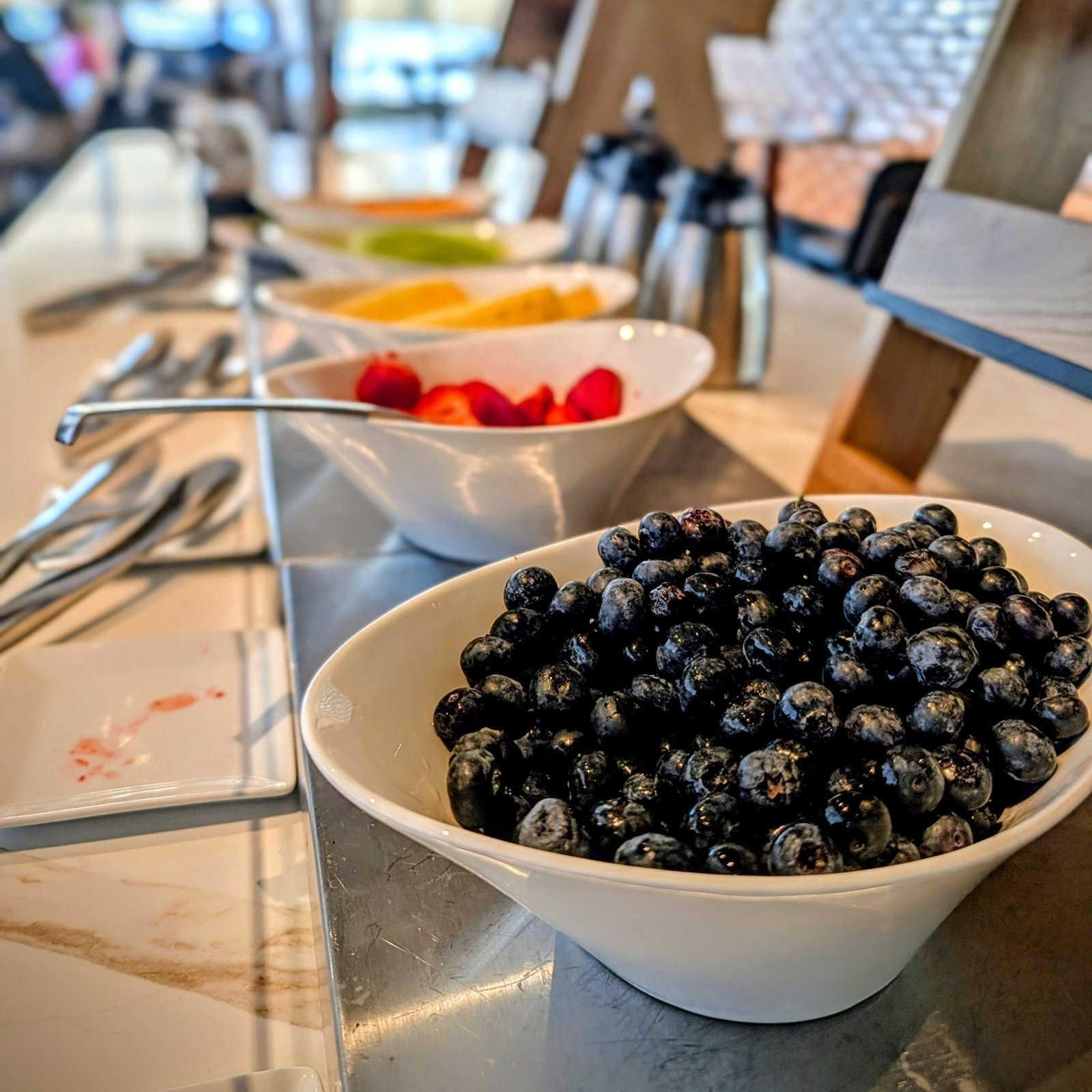
Nutrition environment and the value of complementary breakfast
Complimentary breakfast is often treated as a must-have for some travelers and a nice-to-have for others. No matter where you fall on that spectrum, knowing what breakfast will actually look like can be a major stress reducer and energy stabilizer, especially on work trips or early travel days. And not all hotel breakfasts are created equal.
Understanding brand standards helps here. Even within the same hotel family, limited-service brands can vary widely. For example, across Marriott properties, a Fairfield Inn breakfast may technically check the box, but often offers limited variety and fewer whole-food options. A SpringHill Suites breakfast is more likely to include oatmeal, yogurt, topping bars, and greater flexibility. You are also more likely to find a refrigerator and microwave in the room, which opens the door for simple preparation and personalization.
This kind of flexibility can be the difference between feeling fueled and feeling rushed before the day even begins.
Build a better buffet plate:
Hotel Breakfast, Reimagined: How to Build a Balanced Plate on the Road
In-room wellness features, when they matter and when they do not
Some properties, such as Hilton’s Canopy and Marriott’s Westin, offer wellness rooms with features like yoga mats or even in-room Peloton bikes. These additions can be helpful, especially on tight schedules or short stays.
While they are nice to have, they are not required for a wellness-supportive stay. Often, the fundamentals matter more than specialized equipment. Light, quiet, temperature control, and enough space to move comfortably tend to have a greater impact than novelty features.
Wellness is frequently supported more by the absence of friction than by the presence of extras.
Movement, daylight, and walkability
Movement while traveling does not require a state-of-the-art fitness center. Sometimes, it simply requires opportunity.
- Walkable neighborhoods.
- Access to sidewalks, trails, or green space.
- Courtyards, rooftops, or outdoor seating.
Natural light and low-effort movement support energy, mood, and sleep quality. These features may not always show up in the amenities list, but they often surface in reviews and photos.
When evaluating location, it helps to think beyond distance and consider environment. A slightly longer commute may be worth it if movement and daylight are built into your day.
Make movement part of the trip:
Active Sightseeing: Exploring While Moving
Stress load and cognitive recovery
Travel stress is not just physical. It is cognitive.
Noise. Crowds. Constant stimulation. The pressure to be “on” from morning until night.
Hotels that support wellness often provide small but meaningful ways to reduce that load. Quiet lounges. Outdoor seating. In-room workspaces that are not the bed. Spaces where you can check email, reflect, or simply sit without being overstimulated.
Recovery is not inactivity. It is intentional downregulation.
Brand loyalty, status, and when it truly pays off
Loyalty programs are tools, not guarantees.
Benefits vary widely in execution, even within the same brand. Over the years, I have held top-tier status across IHG, Hilton, and Marriott. All have offered value at times. However, Hyatt’s highest status has consistently delivered the most meaningful benefits, and it is not even close.
For Hyatt Globalists, those benefits tend to show up where they matter most for recovery and routine: dependable lounge access, consistently strong complimentary breakfast, meaningful room upgrades that actually improve comfort, and late checkout that protects sleep on departure days. These features compound on longer or more demanding trips, where energy management, predictability, and recovery carry greater weight than novelty perks.
This is where loyalty can support wellness, but only when the benefits actually align with your needs for that specific trip.
A lived example: the commute versus wellness tradeoff
On a business trip to central Texas, I had two options.
One was a standard limited-service hotel close to the worksite. Minimal walkability. No outdoor space. A basic breakfast.
The other was a property about forty minutes away. The commute was longer, but the hotel offered lounge access, a strong complementary breakfast through loyalty status, a quiet exterior courtyard for evening emails, and direct access to a walking and jogging trail.
Given the length and demands of the trip, the second option was the better choice. The commute was a tradeoff, but the net gain in energy, recovery, and enjoyment made it worthwhile.
This is what a wellness-first decision looks like in practice. It is not about perfection. It is about outcomes.
A simple wellness-first hotel selection checklist (build, then prioritize)
Rather than chasing every possible feature, use the categories below to guide your thinking before you book.
A Wellness-First Hotel Selection Checklist
Build your list, then prioritize what matters most for this trip.
Sleep Support
☐ Temperature and airflow control
☐ Blackout curtains or effective light blocking
☐ Quiet rooms away from streets, elevators, or connecting doors
Nutrition Access
☐ On-site food options with protein, fruit, and whole foods
☐ In-room refrigerator or microwave
☐ Walkable access to grocery stores or cafés
Movement Opportunity
☐ Safe, walkable neighborhood or nearby trails
☐ Outdoor space like courtyards or rooftops
☐ Fitness center access when appropriate for the trip
Stress & Stimulation Load
☐ Quiet spaces to decompress or work
☐ Natural light in rooms or shared areas
☐ Workspace that does not require using the bed
Commute & Schedule Fit
☐ Distance and predictability of commute time
☐ Walkability, transit, or rideshare access
☐ Impact on morning and evening energy across days
How to use this checklist
You do not need to optimize for everything. For each category, identify the decision points that matter most for this trip. Those become your personal booking filters. A one-night road-trip stop will have different priorities than a five-day work trip or a long leisure stay. The goal is not perfection. It is alignment.
Wellness starts before check-in
Choosing a hotel is one of the earliest wellness decisions of a trip. The environment you select either reduces friction or adds to it. A wellness-first lens does not require luxury. It requires intention. When you choose hotels that support how you want to feel, the rest of the trip becomes easier to navigate.
Eat Smart. Travel Farther. Feel Better, starting with where you stay.
Leave a Reply