
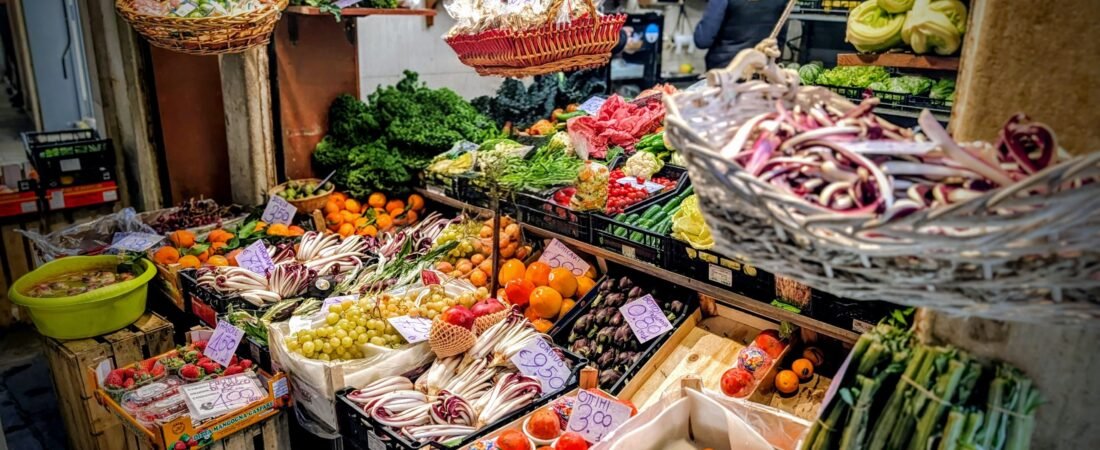
Travel has a way of widening your lens. It invites you to slow down, pay attention, and see familiar things through a different cultural filter. Food is often at the center of that experience. While restaurants, cafés, and street vendors get most of the spotlight, one of the most immersive and underrated ways to understand a place is by stepping into a local grocery store or market.
At home, grocery shopping is routine. Abroad, it becomes something else entirely. A quiet form of exploration. A window into daily life.
Step inside a neighborhood market and you are immediately surrounded by the rhythm of the place. The earthy scent of ripe tomatoes stacked high in wooden crates. The bright colors of unfamiliar fruits arranged with care. The hum of conversation between locals comparing prices, debating ripeness, or sharing cooking tips. A baker sliding fresh bread into paper bags. A shopkeeper offering a small sample with a smile.
Shopping this way is not just about food. It is about observing how people eat, what they prioritize, and how food fits into their everyday lives. With a little curiosity, grocery shopping abroad can feel less like an errand and more like a self-guided cultural tour.
Stick to the basics (and make them local) 🥚🍅🐟
If you are staying in an Airbnb or short-term rental, grocery shopping becomes especially valuable. Access to a kitchenette, even a modest one, opens the door to simple meals that can balance out long days of dining out. It also creates space to slow down and recharge.
Start with the basics. Fruits. Vegetables. Eggs. Yogurt. Bread. Fish or meat if you plan to cook. These staples are widely available almost everywhere, but they often look, taste, or feel different than what you are used to at home.
In many places, eggs are not refrigerated. Yogurt comes in flavors and textures you have never seen. Produce is seasonal in a way that feels more obvious and less engineered. Even something as simple as milk or cheese can taste noticeably different.
Your experience will vary by destination. In Iceland, for example, staying on a horse farm or in a rural area may mean a smaller grocery store with more shelf-stable items and fewer fresh options. But in Florence, near the Duomo, countless shops and markets line the streets, brimming with bread, cheese, cured meats, and produce. Each stop adds another layer to your cultural immersion.
Learning to adapt to what is available is part of the experience. It encourages flexibility and helps you eat in a way that aligns with how locals live, not how tourists expect to be fed.
Explore local produce for a cultural + wellness win 🍇🥖
Grocery shopping abroad turns food into a form of movement and exploration. Instead of walking from monument to monument, you might wander from produce stand to bakery to cheese counter, building a meal one ingredient at a time.
This kind of exploration naturally blends cultural immersion with wellness. You are walking more. Standing. Carrying groceries. Pausing to observe. Asking questions. All while gathering food that is often fresher, less processed, and more seasonal than what you might default to at home.
In France, asking a vendor “C’est bien mûr?” (“Is it ripe?”) often sparks a brief conversation and a recommendation for the best fruit on the stall. In Italy, a simple “Posso assaggiare?” (“May I taste?”) might lead to a slice of cheese or cured meat before you buy. These interactions are small, but they stick with you.
They remind you that food is not just fuel. It is social. It is local. It is deeply tied to place.
Turn small moments into lasting memories.
Want an easy way to capture food finds, conversations, and cultural details as you go? Try Journaling Prompts for Mindful Travel.
Read the labels, but don’t overthink them 📦
One of the joys of grocery shopping abroad is noticing how different food labeling and packaging can be. Portions are often smaller. Ingredients lists shorter. Marketing more subdued.
You may find fewer “diet” claims and more straightforward descriptions. Bread that goes stale faster. Yogurt without added sugar by default. Snacks that feel indulgent but less aggressively sweet.
This is not to say everything is inherently healthier. Every country has its ultra-processed foods. But browsing shelves with fresh eyes can help recalibrate your sense of what “normal” food looks like.
If you enjoy reading labels, take a moment to compare. If you do not, focus on whole foods most of the time and let packaged items be part of the experience, not the foundation.
Don’t be afraid to splurge 🍫🥐
Part of the joy of grocery shopping abroad is discovering treats you cannot find at home. This is not the moment to hold back out of principle.
Maybe it is a regional chocolate bar. A bag of chips in a flavor that does not exist in your country. A pastry that has been on your mental must-try list for years.
Savoring a kanelsnegle in Copenhagen or a box of macarons in Paris is not just about taste. It is about memory. These small indulgences often become sensory bookmarks. Years later, one bite can transport you back to that exact place.
Enjoy them intentionally. Share them. Pair them with nourishing foods rather than replacing meals entirely. Balance does not mean avoidance. It means awareness.
Enjoy the treats, keep the energy.
If you want a simple way to balance local indulgences with feeling good on the move, explore Balancing Indulgence and Nutrition on Vacation.
Use groceries to create breathing room in your itinerary 🍽️
Eating out is one of the great pleasures of travel, and you should absolutely experience the dishes that made a destination famous. But on longer trips, constant restaurant meals can become surprisingly exhausting.
Cooking one or two simple meals in your rental can create space to rest. A night in. A slower evening. A chance to connect with your travel companions without a reservation or a menu in front of you.
A simple meal of bread, cheese, salad, and fruit enjoyed on a balcony or at a small kitchen table can be just as memorable as a restaurant experience. Often more so.
These meals become part of the story. The time you tried to decipher a foreign stove. The conversation that unfolded while chopping vegetables. The sense of normalcy in the middle of adventure.
Let grocery shopping shape how you eat, not limit it 🧺
Grocery shopping abroad is not about replacing restaurants or eating “perfectly” while traveling. It is about expanding your options.
It gives you flexibility. It allows you to eat when you are hungry rather than when reservations dictate. It supports energy and digestion on busy travel days. And it helps you experience food as locals do, not just as a visitor passing through.
You may still eat out most nights. That is fine. The goal is not to optimize every meal. It is to create a rhythm that supports how you want to feel.
Keep it flexible, stay present.
If you want to approach new food environments with more awareness and less overthinking, read Mindful Eating on Vacation.
💡 Takeaway
Grocery shopping abroad is more than a practical stop. It is a cultural experience, a wellness tool, and a storytelling opportunity all in one. From discovering unfamiliar produce to savoring local treats, markets and grocery stores invite you into the everyday life of a place.
Slow down. Wander the aisles. Ask questions. Taste freely. Let food become part of how you explore, not just something you consume between destinations.
Eat smart. Travel farther. And don’t skip the market.
Leave a Reply