
Your flight lands late. The seatbelt sign dings off. You glance at your phone and realize you have twelve minutes to get from one end of the terminal to the other. Suddenly, what was supposed to be a routine connection turns into a full-blown 5K through moving walkways, escalators, and crowds who somehow all stop walking at once.
By the time you reach your gate, you’re out of breath, slightly annoyed, and staring down another few hours before your next real meal. The only food in sight is a cooler of sodas, a rack of chips, and a vending machine blinking “card reader unavailable.”
This is where airport snacking shifts from convenience to strategy. Tight connections, long lines, and stretched terminals don’t leave much margin for thoughtful decisions, especially when time is limited.
Smart airport snacking isn’t about perfection. It’s about preparation, awareness, and flexibility. When you know what to look for, and when to rely on a backup plan, you can choose foods that support steady energy, focus, and patience, even on busy travel days.
This post builds on the fundamentals of travel nutrition and macros, but zooms in on one specific moment where many travelers struggle: the airport snack run.
Why Airport Snacks Matter More Than We Think
Airport snacks are rarely just snacks. They’re often meal replacements or energy bridges during long travel days. And let’s be honest, the snacks served on your flight are rarely enough to carry you to the next real meal. They’re more like an appetizer to a snack, a true “snacketizer.” That’s why what you choose in the airport actually matters. The goal isn’t to eat perfectly; it’s to choose something that will sustain energy, curb hunger, and get you comfortably to the next meal instead of counting the minutes until you land.
When those choices are mostly refined carbohydrates and added sugars, energy tends to spike quickly and crash just as fast. That crash often shows up as irritability, brain fog, and the sudden urge to eat everything in sight once you land.
Choosing snacks that include protein, fiber, and some healthy fat helps stabilize blood sugar, extend satiety, and keep energy more even across long stretches of travel.
Airport Snacks Are Just One Piece of Travel Nutrition
Airport food decisions don’t exist in isolation. They sit within a broader travel nutrition picture that includes meals before your flight, snacks you pack, hydration, and what you eat once you arrive.
Understanding how these pieces fit together makes it easier to approach airport food with flexibility instead of stress.
Airport snacks are just one piece of travel nutrition.
If you want the bigger picture on how to fuel well while traveling, start with Travel Nutrition 101.
What to Look for When Scanning Airport Options
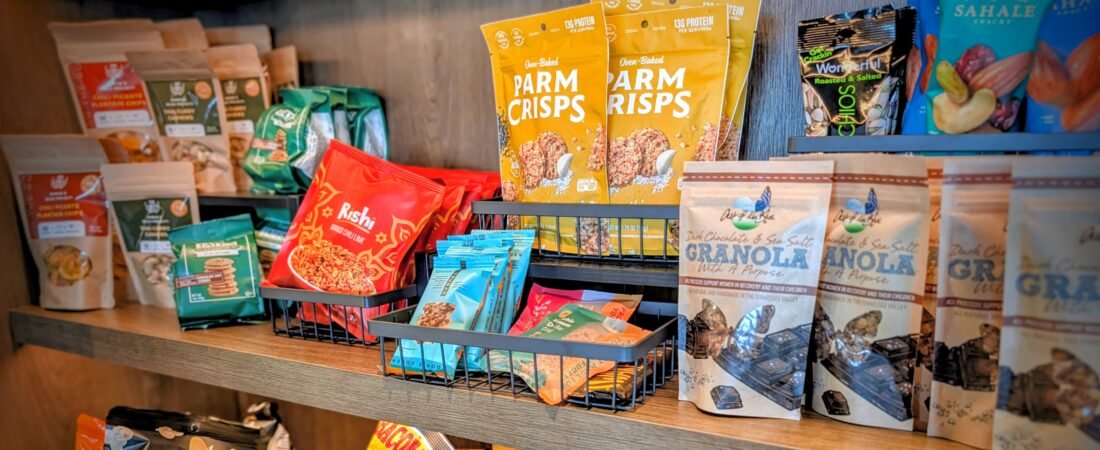
Most airports actually offer decent snack options if you know what to look for. The trick is shifting from brand names to nutrient patterns.
Reliable airport-friendly choices include:
- Fresh fruit or fruit cups, ideally paired with protein
- Trail mix, especially versions with nuts and seeds, not just candy
- Jerky or meat sticks, beef, turkey, or plant-based options
- Cheese snacks paired with fruit or whole-grain crackers
- Hummus packs with veggies or pita
- Greek yogurt or skyr, plain or lightly sweetened
Make it work for you.
You can customize yogurt with fruit, nuts, seeds, or a touch of your preferred sweetener. Building it yourself gives you more control over ingredients and lets you choose what supports your energy, rather than settling for whatever is available.
These options are portable, easy to eat between gates, and far more supportive than ultra-processed snack foods alone.
Build Balance Into Your Snack
A helpful rule of thumb for airport snacking is to include at least two of the three:
- Protein
- Fiber-rich carbohydrates
- Healthy fats
For example:
- Apple slices with peanut butter
- Yogurt with berries and nuts
- Jerky with fruit and a handful of trail mix
This balance slows digestion, reduces blood sugar swings, and helps the snack actually do its job.
Not sure why protein and fiber matter so much?
Get a simple breakdown of how carbs, protein, and fats support energy in Macros Made Simple: The Building Blocks of Fuel.
Why Ultra-Processed Foods Fall Short
Candy, baked goods, and other ultra-processed foods are everywhere in airports because they’re shelf-stable and profitable. They’re also fast energy with very little staying power.
That doesn’t mean you can never enjoy them. It does mean they work best after a balanced meal or alongside protein and fiber, not as a standalone snack when you’re already under-fueled.
When ultra-processed choices become the only option, energy crashes are more likely, especially when paired with caffeine and dehydration.
Scouting Ahead Helps, But Isn’t Foolproof
In theory, checking airport maps or apps ahead of time sounds great. In reality, interactive maps are often clunky, outdated, or not very user-friendly.
And then there are the logistics of airports. Tight connections that somehow always involve a sprint from one end of the terminal to the other.
If you find something near your gate, great. If not, that’s where a contingency plan matters.
Your backup plan when airport options fall short.
A simple travel pantry can save you during tight connections or limited options. Learn how in Building Your Travel Pantry.
The Contingency Snack Pack Is Your Insurance Policy
Packing a few shelf-stable snacks removes the pressure to make perfect airport choices. It also prevents the “I’ll just wait until later” trap that often turns into hunger-driven decisions.
A simple contingency pack might include:
- Protein bars with moderate sugar
- Nuts or trail mix
- Jerky or meat sticks
- Crackers or rice cakes
- Electrolyte packets
These items don’t need to replace airport food entirely. They simply give you options when the environment doesn’t cooperate.
Caffeine Is Not a Snack
Airports are excellent at selling caffeine. They are less excellent at reminding people that coffee alone does not count as fuel.
Caffeine without food often amplifies blood sugar swings, especially during long travel days. Pairing coffee with a balanced snack helps smooth energy and reduce jitters.
Think of caffeine as a supplement to food, not a substitute for it.
Progress Over Perfection
Smart snacking at the airport is not about hitting macro targets or finding the perfect option. It’s about making the best choice available with the time and access you have.
Sometimes that means yogurt and fruit. Sometimes it means a protein bar and trail mix. Sometimes it means an ultra-processed snack paired with protein because that’s what’s realistic.
All of those choices can fit within a supportive travel nutrition strategy.
💡 Takeaway:
Airport snacking doesn’t have to derail your energy. By looking for protein, fiber, and healthy fats, scouting options when possible, and packing a simple contingency snack kit, you can fuel long travel days without the crash. Smart snacks keep you focused, patient, and ready for what comes next.
Eat Smart. Travel Farther. Even Between Gates.
Leave a Reply