
You are standing in an airport terminal at 7 AM. You have already made a dozen decisions before your gate even came into view. Where to park. Which security line. Whether to check a bag. Now you are staring at a wall of options between a grab-and-go kiosk, a fast-casual chain, and a coffee counter with a case of pastries. You pick something. You move on.
Three days later, you are in Lisbon. You step out of your hotel before a morning meeting and there is a bakery on the corner with two things in the case: a custard tart and a bread roll. You order both. You sit for ten minutes and let the city wake up around you.
Same traveler. Completely different experience. The difference was not discipline. It was not a meal plan. It was the environment.
Your Home Routine Is Built on Infrastructure You Don’t Notice
While we face countless decisions every day about our wellness, our natural home environment makes some of those choices less demanding. There is a grocery store you trust, a handful of meals in rotation, a rhythm to the week. Even the less-than-ideal choices are familiar and predictable.
Travel disrupts all of that infrastructure at once. The store is different. The schedule is off. The kitchen, if there is one, is unfamiliar. Suddenly, our choices require more active decision-making at every turn, and those decisions stack up across a full travel day before most people have had a single meaningful meal.
Understanding this is the first step toward eating well on the road. Not because you need a tighter plan, but because you need to recognize what you are actually working against.
Decision Density and What It Costs You
Every decision you make pulls from the same cognitive pool. Navigating an unfamiliar city, managing logistics, adjusting to a new time zone, sitting through back-to-back meetings in a conference room you have never been in before. All of it draws on the same reserves.
Food decisions are no exception. When the food environment is unfamiliar, even minor choices require more mental effort. What is this? Is it good? Is there a better option nearby? How much is that? By mid-afternoon, the appeal of whatever is easiest is not a character flaw. It is a predictable physiological response to a high-decision environment.
There is also a layer worth naming: travelers are often actively seeking new foods as part of the experience. Trying a regional dish, visiting a restaurant that does not exist at home, saying yes to something unfamiliar. That kind of intentional exploration is part of what makes travel meaningful, and it is not a problem to manage. The distinction that matters is between choosing something because it is genuinely interesting versus defaulting to whatever the environment makes easiest because the cognitive tank is running low.
Eating well on the road doesn’t require tracking everything.
Here’s how to stay nourished without turning every meal into a math problem. Eating Well Without Tracking While Traveling
How Other Cultures Structure Food Access
This is where the conversation shifts from individual behavior to systems, and it is where some of the most useful insight lives for travelers.
Fresh food is structurally closer.
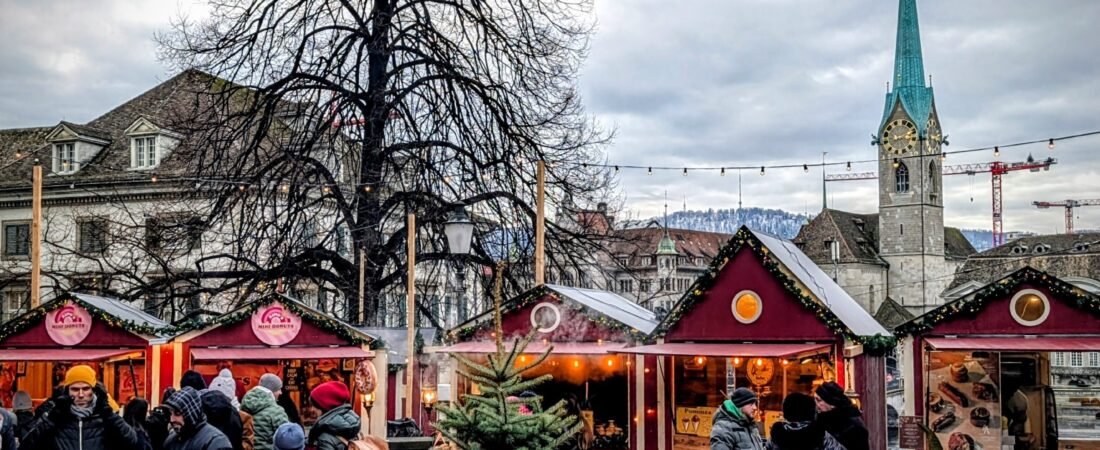
Often when traveling overseas, such as in much of Europe and across large parts of Asia, Latin America, and the Middle East, fresh food is not a destination. It is a feature of the neighborhood. Street markets, daily vendors, small bakeries, and produce stands are woven into the built environment in a way that makes them the path of least resistance. You do not need to plan to eat well. You walk outside and the option is there.
Compare that to the dominant U.S. model, where fresh food often requires a car, a larger store, and a deliberate trip. Convenience food fills the gaps in between, and it fills them densely. Vending machines in hallways. Drive-throughs on every corridor. Grab-and-go options engineered for speed, shelf life, and margin.
When travelers arrive somewhere with a different food infrastructure, they often notice the contrast without being able to name it. The food just feels different. It often is, structurally, before a single intentional choice is made.
Meal timing is protected.
In southern Europe, across much of Latin America, and in parts of Southeast Asia, midday is treated as a real meal, not a slot to optimize. In some places, businesses close. In others, the lunch hour stretches to two hours, unhurried and social. The food environment supports this: sit-down options expand, grab-and-go options contract.
The structure does not just change what people eat. It changes how they eat, and how much mental space eating takes up across the day. When a meal is an event rather than a transaction, the downstream decisions tend to be easier.
Eating is relational, not transactional.
Family-style service. Shared plates. Meals that last ninety minutes not because the food is slow but because the table is the point. Later dinners. Smaller portions served in sequence rather than delivered all at once.
These are not just cultural preferences. They are structural features of food environments that shift behavior at scale. When eating is communal and unhurried, the dynamics around consumption change without anyone consciously managing them. The environment does the work.
Cultures with lower rates of travel-related overindulgence often have environments that make good choices structurally easier. That is not an accident. It is architecture.
Navigating a grocery store abroad is its own skill.
Here is what to look for, and how to make it work in your favor. Grocery Shopping Abroad
The Real Challenge Is Getting There, Not Being There
It is worth being specific about where travel eating gets hardest: in transit.
Airports, highway rest stops, train station concourses, and conference center corridors are where processed food saturation peaks. These environments are engineered for throughput. The business model rewards speed and shelf stability, not nutrition density. And they tend to catch travelers at moments of high decision fatigue, time pressure, and low blood sugar.
Once you arrive, and especially when traveling internationally, that pressure typically drops. Local food culture fills the environment in ways that make better options more accessible, not less. The airport was the gauntlet. The destination is generally easier than anticipated.
This matters because a lot of travel wellness advice is calibrated to the worst-case transit environment as if it represents the whole trip. It does not. Strategies for the journey and strategies for the stay can and should be different.
Limited options at the airport don’t have to mean a lost cause.
Here is how to eat well even when the terminal is working against you. What to Do When Airport Food Options Are Limited
What Travelers Can Actually Control
None of this is an argument for passivity. Understanding the environment is useful precisely because it clarifies where leverage actually exists.
A few things that hold up across most travel contexts:
Pre-arrival awareness. Knowing roughly what the food environment looks like at the destination changes how you approach the first day. Is there a market nearby? A sit-down option within walking distance? That brief scan before you land reduces the number of decisions you face under pressure on arrival.
Anchor meals. Establishing one reliable, intentional meal per day creates a nutritional foundation that makes the rest of the day easier to navigate. It does not have to be elaborate. It just has to be deliberate.
Leaning into the local environment rather than fighting it. If the destination has a food culture that makes good choices structurally easy, use it. Walk to the market. Sit for lunch. Order what is local and fresh. The environment is working for you. Let it.
The Reframe That Makes Every Trip Easier
Here is the shift that changes things long-term: when travelers understand that food environment is the primary variable, they stop interpreting every imperfect travel meal as a personal failure.
That matters more than it sounds. Guilt is cognitively expensive. Ruminating on a bad airport meal, deciding the whole trip is already off-track, recalibrating with restriction. That cycle costs more energy than the meal itself and tends to produce worse decisions in the hours that follow.
When the environment is understood as the variable, the traveler becomes an observer and an adapter rather than a subject of their own judgment. The airport was hard. The destination will be different. What is available here, and what is the best choice within it?
That is not a lowered standard. It is a more accurate model of how eating actually works on the road, and it is a significantly more sustainable one.
Food environments shape behavior. Understanding that is not an excuse. It is an advantage.
Want structure without the tracking?
Eating Well Without Tracking While Traveling offers a simple framework for keeping meals balanced when your environment keeps changing around you.
Eat Smart. Travel Farther.
Leave a Reply