
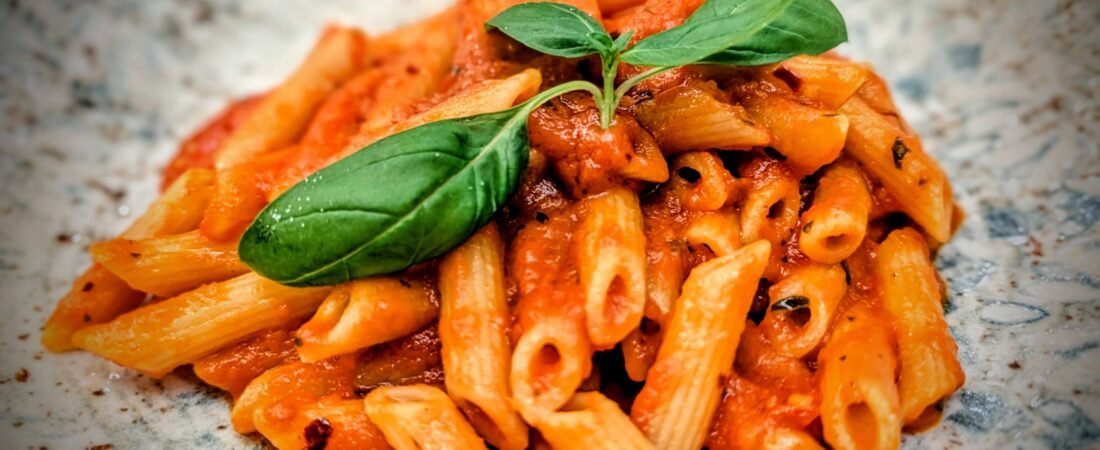
The past month has been good. Really good. You have been meal prepping on Sundays, hitting your fitness class three times a week, getting outside for morning walks. Sleep is better. Energy is steadier. You found your rhythm.
Then you open your calendar and see it. Ten days in Italy. Wine. Pasta. Tiramisu. Meals that last two hours at a table with no nutritional information in sight. No kitchen. No food scale. No reliable WiFi to log anything even if you wanted to.
The quiet anxiety sets in. Will the wheels come off?
Here is the thing. For some people, tracking is a genuinely useful tool. It builds awareness, creates accountability, and helps calibrate decisions over time. For others, it creates guilt, obsession, and a complicated relationship with food that does more harm than good. Neither experience is wrong. What matters is finding the approach that supports your whole health, not just your macros.
And when you are sitting across from a bowl of cacio e pepe in Rome, tracking probably is not that approach. This post is about replacing one tool with another. One that actually travels.
Why Tracking Breaks Down on the Road
Tracking works best in controlled environments. At home, you know your portions, your brands, your kitchen. On the road, that control disappears. Restaurant portions are unpredictable. Labels vanish. The mental overhead of logging every meal competes with a cognitive load that is already running high from travel logistics, time zone shifts, and a full itinerary.
Add unreliable connectivity to the mix, and app-based logging becomes more frustrating than helpful. More importantly, pulling out your phone to log a meal while your travel companions are laughing over a shared plate of antipasto is not just inconvenient. It pulls you out of the moment. Travel is one of life’s better experiences. The goal is to be present for it.
A Framework That Fits in Your Pocket
When tracking is not available or not useful, a simple visual framework does the heavy lifting. Think of your plate in four parts.
Half your plate goes to vegetables and fruit. This is your nutrient density anchor, the part of the meal that provides variety, volume, fiber, and the micronutrients your body needs to keep running well across a long trip.
One quarter goes to lean protein. Chicken, fish, legumes, eggs, whatever the local cuisine offers. Protein supports satiety and helps maintain muscle when your training routine is disrupted.
The remaining quarter goes to carbohydrates, ideally fiber-containing and less processed when you have the choice. Whole grains, legumes, root vegetables. Not a rule to stress over, but a useful filter when options exist.
This framework works at a hotel buffet, a sit-down restaurant, a terminal grab-and-go, or a trattoria in Florence. No app, no label, no WiFi required.
New to travel nutrition?
Travel Nutrition 101 covers the foundational principles for fueling well on the road, wherever it takes you.
Finding Your Anchors
The plate framework is easier to apply when you start with two anchors and build around them: protein and produce.
Before anything else lands on your plate, ask where your protein is coming from and where your vegetables or fruit fit in. These two categories are available in nearly every food environment if you know what to look for. A grilled fish. A side salad. A vegetable-forward shared dish. A piece of fruit from a market stall.
Once those anchors are in place, the rest of the plate fills naturally. The carbohydrate quarter tends to take care of itself, especially when you are eating in cultures that center their meals around bread, rice, or pasta. Let it. The anchors are doing the work.
Intention Over Precision
Portion awareness on the road is not about eating less. It is about eating with intention. And intention starts with attention.
Slow down. Put the phone away. Notice when you are hungry and when you are satisfied, not stuffed. Travel has a way of compressing meals into rushed fuel stops or expanding them into long, leisurely social events. Both can work. The difference is whether you are present for either one.
Eating mindfully, truly paying attention to taste, texture, and your body’s signals, is one of the most underrated tools in the travel wellness toolkit. It requires no tracking, no app, and no prior planning.
Presence is a nutrition strategy too.
Mindful Eating on Vacation explores how slowing down and paying attention changes the way you eat and feel on the road.
The Next Meal Is the Reset
One off meal does not require a corrective day. It does not require skipping breakfast, adding an extra workout, or mentally penalizing yourself through the afternoon. That kind of all-or-nothing thinking is what makes travel feel like a threat to your progress rather than a part of your life.
The reset is the next meal. That is it. You order something that fits the framework, you find your anchors, and you move forward. Progress, not perfectionism. That applies at home, and it applies in Italy.
Enjoying the trip without losing the plot.
Balancing Indulgence and Nutrition on Vacation covers how to embrace the food experiences travel offers without undoing the progress you have worked for.
You Do Not Need a Number
You do not need a number to eat well on the road. You need a framework simple enough to apply anywhere and flexible enough to survive a two-hour dinner in Naples.
I have eaten well in places where I could not read the menu, could not find a nutrition label, and could not log a single thing. Not because I ignored food quality, but because I stopped needing precision to make good decisions. The plate framework, the anchors, the intention. Those travel. The app often does not.
Eat Smart. Travel Farther.
Leave a Reply