
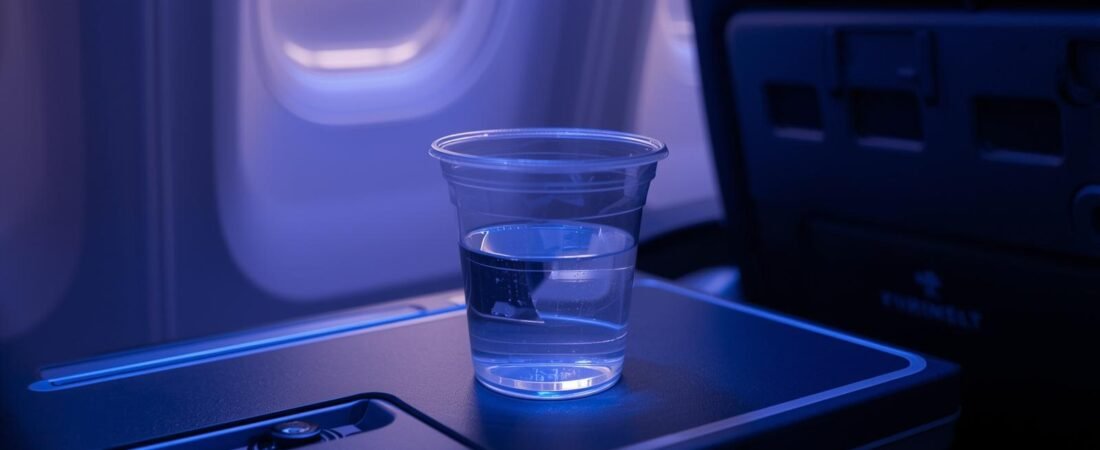
Is hydration really that important on a travel day? If your post-flight plans involve heading straight to the spa or lounging under an umbrella, you might get by without much thought. But if you’re hiking a trail, exploring city streets, or planning an evening of cocktails by the pool, how well you hydrate can shape how the whole trip feels.
Flying makes it trickier. Cabin air is extraordinarily dry, travel days scramble your usual routine, and it is easy to go hours without drinking much of anything. A little planning before, during, and after the flight makes it much easier to stay hydrated on long flights and to land ready to enjoy where you’re going.
Why Flying Leaves You Feeling Dry
Airplane cabins typically run at very low humidity, often in the range of 10 to 20 percent and drier than many deserts, because the air drawn in at cruising altitude holds very little moisture. That dry air is what makes your eyes feel gritty, your lips and skin tight, and your throat scratchy by the end of a long flight.
It’s worth keeping that in perspective. Dry air does increase the water you lose through breathing and your skin, but the added loss is modest. The bigger factors are usually behavioral: drinking less than usual because of security lines and tight connections, skipping water to avoid climbing over a seatmate, and pairing the flight with coffee, alcohol, and salty snacks while spending hours sitting still. The good news is that those are exactly the things you can control.
Insensible water loss.
The water your body loses through breathing and evaporation from the skin, without sweating. Dry cabin air increases it somewhat, which is part of why long flights leave you feeling parched.
Before You Fly: Start Hydrated
The easiest way to stay hydrated on a flight is to board already well hydrated. Drink normally the day before, have a glass of water with breakfast, and skip the urge to make up for it by downing a large bottle at the gate, which mostly sends you looking for a restroom during boarding.
Bring a reusable bottle, whether that’s a Stanley, a Yeti, a Hydro Flask, or whatever you swear by. One well-known trick is to fill it with ice before leaving home, since TSA allows ice through security as long as it is frozen solid at screening; if it has started to melt and there is liquid in the bottle, it has to follow the liquids rule. Once you’re through, top it off with water, and you’ll have cold water for the whole flight. An empty bottle works just as well if you’d rather fill it at a station past security.
Flying out at dawn?
What to Eat Before an Early Morning Flight covers simple ways to fuel up before a pre-sunrise departure.
In the Air: Sip Steadily
Rather than waiting for the drink cart, keep your own water within reach and sip steadily throughout the flight. On long flights, roughly a cup an hour is a reasonable guide, adjusted for your size, the conditions, and your thirst. Small, regular sips are easier on your body, and your bladder, than occasional large amounts.
If you tend to drink less to avoid disturbing the people in your row, an aisle seat solves the problem, and a trip to the restroom doubles as a chance to stretch your legs on a long flight.
What About Coffee?
Coffee and tea have long carried a reputation for being dehydrating, but for most people that reputation is overstated. Caffeine does have a mild diuretic effect, mainly at high doses or for people who rarely consume it, but regular coffee drinkers build a tolerance to it, and the fluid in a cup of coffee more than offsets any extra fluid lost. In one well-designed study, habitual coffee drinkers who had four cups a day for three days showed hydration markers no different from when they drank the same amount of water. The study included only men who were regular coffee drinkers, but it fits the broader evidence: for most travelers, a moderate amount of coffee or tea counts toward hydration rather than against it. The more practical reason to watch caffeine on a travel day is sleep, especially when you’re crossing time zones.
And Alcohol?
Alcohol is a different story. It does increase fluid losses, and the effect stacks on top of the dry cabin and a long day. If you enjoy a drink in the air, pair each one with water, keep in mind that it can hit harder when you’re tired and haven’t eaten much, and avoid becoming the star of someone’s viral video.
Crossing time zones?
Jet Lag Recovery: Nutrition Strategies That Work shows how to time meals, light, and caffeine to adjust faster, and Alcohol on Vacation covers balancing drinks once you arrive.
When You Land: Rehydrate for Your Destination
Arrival is a good time to catch up, especially if you fell behind in the air. Refill your bottle before leaving the airport and drink steadily over the next few hours rather than all at once.
Your destination matters too. Flying from a cold, dry climate to a hot, humid one increases how much you sweat, and it can take several days for your body to adapt to the heat. During that stretch, keep water with you, take shade breaks, and lean on hydrating foods such as fruit, vegetables, and soups. Even the watermelon and pineapple at the breakfast buffet contribute more fluid than most people realize.
Electrolytes: When They Help and When They’re Marketing
Do you need electrolytes as much as the ads suggest? Most of the time, no. For everyday life and even most travel days, water and regular meals provide the sodium and other electrolytes your body needs.
They earn their place in a few situations: very long flights where meals are sparse, hot and humid destinations where you’re sweating heavily, long active days like a big hike, and recovering after illness or a night with more drinks than planned. A packet or two in your bag is inexpensive insurance. Look for options with a meaningful amount of sodium, since it’s the electrolyte lost most in sweat, and skip the sugar-heavy versions unless you’re fueling a long activity.
Packing for the trip?
Building Your Travel Pantry includes an electrolyte mix alongside travel-friendly snacks that go the distance.
How to Tell You’re Falling Behind
Thirst is a useful signal, but it tends to show up a little late, so it helps to watch for other early signs as well: darker urine, a dull headache, unusual fatigue, a dry mouth, or feeling lightheaded when you stand. Pale yellow urine is a simple, practical sign that you’re keeping up. If you notice the early signs, a few glasses of water over the next hour, along with a meal or snack, usually sets things right.
Takeaway: Staying hydrated on long flights comes down to starting hydrated, sipping steadily in the air, and catching up when you land, with extra attention when you’re heading somewhere hot. Coffee counts for most people, alcohol calls for a glass of water alongside it, and electrolytes are a helpful backup rather than a daily requirement. Plan your hydration like your itinerary, and you’ll step off the plane ready to explore.
Eat Smarter. Travel Farther.
Leave a Reply