
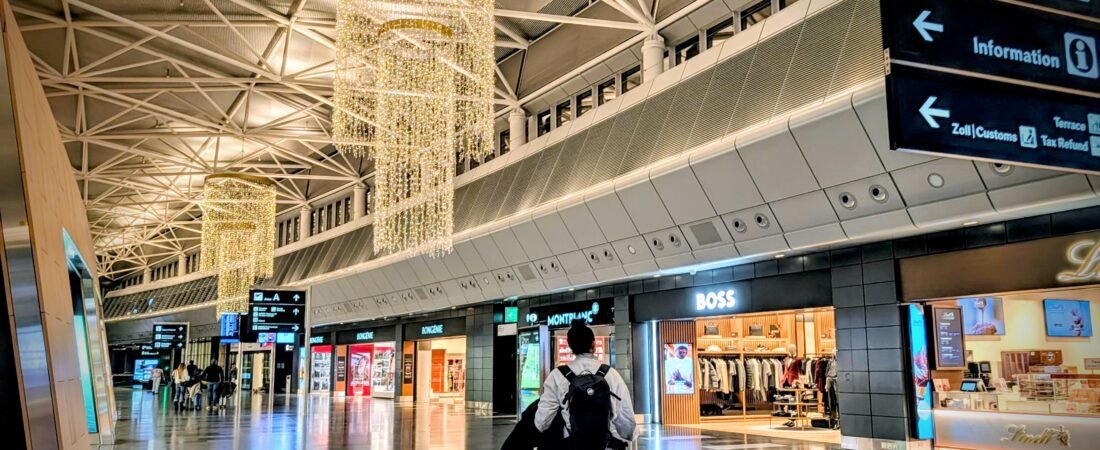
You know the scene.
A delay turns into two. The terminal feels half asleep. Most of the vendors are closed, or worse, open but picked over. You finally convince the gate agent to issue a $10 meal voucher that barely covers a coffee and a snack. You’re tired, stressed, and hungry, and the idea of making a “good” food choice feels laughable.
This is one of the most common travel nutrition pain points, and one of the most misunderstood. When airport food options are limited, many travelers assume they’ve missed their chance to fuel well. But limited doesn’t mean nothing works.
It just means the rules change.
Reframing the problem: limited doesn’t mean useless
When options are scarce, the goal is no longer to build an ideal meal. The goal is to build something supportive enough to stabilize energy, mood, and focus while you wait out the chaos.
This isn’t lifestyle nutrition. It’s travel triage.
Under stress, having nothing often backfires. Blood sugar drops, patience wears thin, decision fatigue increases, and when food finally becomes available later, after landing, after baggage claim, after the drive to the hotel, it’s much easier to overeat or make choices that leave you feeling worse.
In most cases, something imperfect now beats nothing while you wait.
Why “waiting it out” usually makes things worse
It’s tempting to tell yourself you’ll just wait until you land, or until something better opens. But travel delays stretch time in unpredictable ways.
While you wait, stress stays elevated, hunger signals get louder, small inconveniences feel bigger, and focus and patience drop.
By the time food finally becomes available, you’re no longer choosing. You’re reacting.
Eating a small, imperfect combination earlier often leads to better decisions later, not worse ones.
A simple priority order when options are scarce
When you’re standing in a convenience store aisle or staring into a mostly empty kiosk, decision paralysis is common. A simple hierarchy helps.
Think in this order:
- Fluids (water is the fastest win)
- Protein (even a modest amount helps stabilize energy)
- Carbohydrates (your brain still needs fuel, especially under stress)
You don’t need all three perfectly. You just need to move in this direction.
Where to look when restaurants aren’t an option
When “real food” places are closed, shift your mindset from meals to components.
Convenience stores
- Yogurt, milk, soy milk, or protein drinks
- Nuts, trail mix, jerky
- Fruit cups, bananas, apples
Coffee shops
- Milk-based drinks as partial fuel
- Yogurt cups or oatmeal packets
- Breakfast items you can deconstruct
Kiosks and newsstands
- Nut packs or protein bars
- Crackers or pretzels
- Chocolate or baked goods as carb add-ons, not the base
You’re not shopping for a plate. You’re shopping for building blocks.
Airport charcuterie logic: build a meal from unlikely parts
This is where creativity pays off.
“Airport charcuterie logic” means combining a few items that would never appear together on a menu, but collectively do the job.
Examples that work surprisingly well:
- Yogurt + banana + a small nut pack
- Milk or soy milk + protein bar
- Crackers + cheese + fruit
- Trail mix + protein drink
- Oatmeal cup + nut butter packet
None of these are glamorous. All of them can stabilize energy, reduce irritability, and help you think clearly while you wait.
The key is pairing. Protein plus carbs beats carbs alone. Fluids plus food beats caffeine alone.
When to eat now versus when waiting makes sense
There are moments when waiting is reasonable, but they are rarer than most people think.
Eating now usually makes sense if:
- You’re already hungry or irritable
- You’ve had caffeine but no food
- Your next real meal is uncertain or hours away
Waiting may be reasonable if:
- You recently ate and feel stable
- You’re bridging a short, predictable gap
- You have food packed or guaranteed access soon
This isn’t about discipline. It’s about reducing unnecessary stress on an already demanding travel day.
Food is a lever for stress, not just fuel
Travel disruptions strip away control. Eating something, even something small, restores a bit of agency.
It gives your body fuel, your brain stability, and your nervous system a signal that you’re not in crisis. That matters more than hitting perfect targets when flights are delayed and gates keep changing.
Why stress and fueling are linked.
Sleep, stress, and nutrition tend to move together on travel days. If you want the systems view, read How Sleep, Stress, and Nutrition Interact While Traveling.
Progress over perfection
Packing snacks helps. Planning ahead helps. But even the best travelers get caught off guard by long delay days or unexpected closures.
Improvising does not mean you failed. It means you adapted.
Limited airport food options don’t require perfect decisions. They require flexible ones.
When you can, add protein. When you can, include carbs. Start hydration early. Then move on with your day.
Need a back-up plan when options are slim?
These strategies make “grab-and-go” more reliable. See Smart Snacking at the Airport.
Looking for full-meal options by terminal?
If you have more than a kiosk to work with, use this guide to scout better meals. Explore the Airport Restaurant Guide.
💡 Takeaway: Limited airport food options don’t mean you’re stuck. With a simple priority order (fluids → protein → carbs) and a little creativity, you can build supportive meals from unlikely combinations. Airport “charcuterie logic” is not about doing it perfectly, it’s about fueling well enough to stay steady, focused, and patient until you get where you’re going.
Eat Smart. Travel Farther. Even when the terminal is working against you.
Leave a Reply